
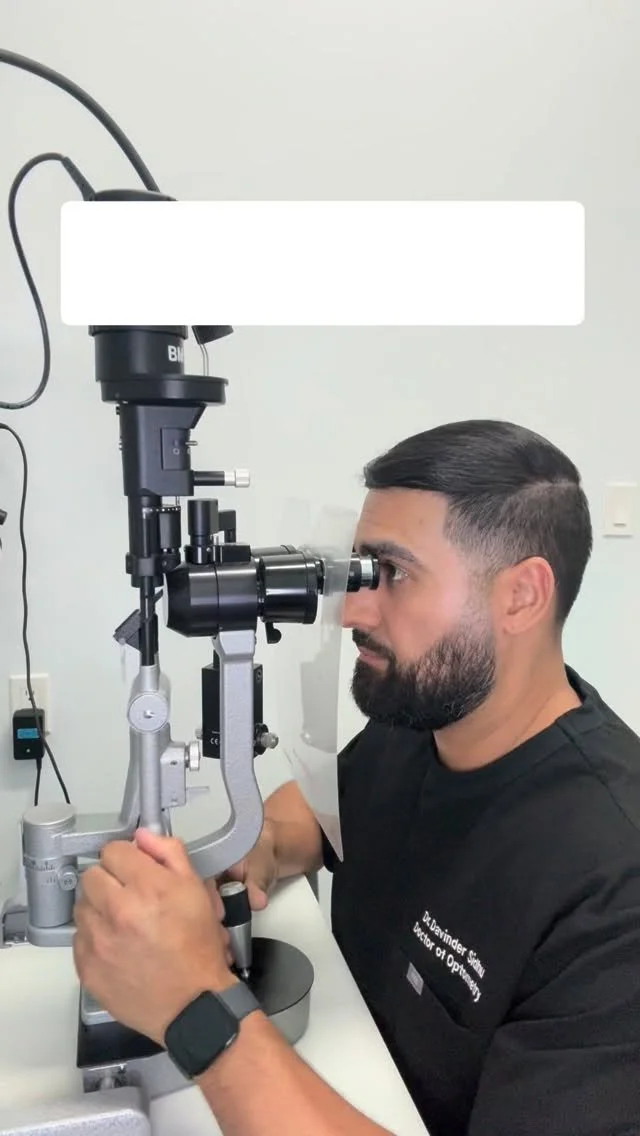
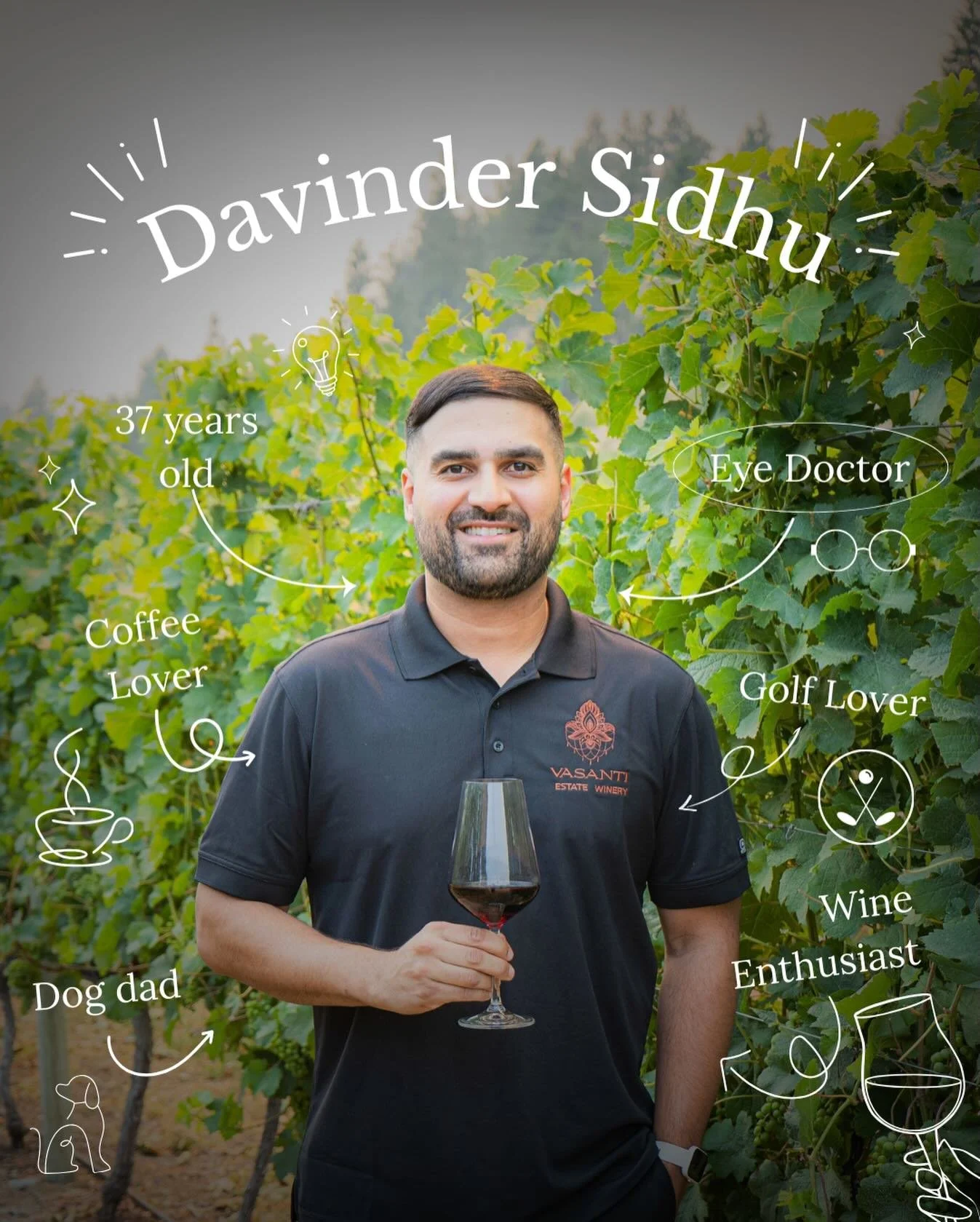
Meet Dr. Davinder Sidhu — The Genuwine OD

I’m a patient-centered, compassionate, and trusted award-winning optometrist, researcher, entrepreneur, and speaker. Born in Penticton and raised in Oliver, BC, I grew up working our family’s vineyards and orchards—where craft and discipline took root.
I earned a B.Sc. in Biochemistry from UBC Okanagan (wine/plant concentration) and published research on methoxypyrazines in cool-climate wines. I completed my OD at the Pennsylvania College of Optometry in 2015 with high academic and clinical honors.
After graduation, I served as a travel doctor in remote and First Nations communities across BC, which shaped my belief that care must be excellent, accessible, and practical. In 2017, I opened Prince Rupert Optometry. Today I’m a multiple-practice owner and online business owner, and I’ve advised 100+ practices on patient experience, start ups, analytics, marketing, and team systems.
My approach is simple: human-first care, clear systems, and metrics that serve people. As a speaker, I give lectures on eye health, patient-doctor connection, business/clinic startups, and practice growth.
Beyond clinic, I’m WSET Level 2 and Director of Operations & Co-Proprietor at Vasanti Estate Winery in Oliver—an award-winning project that blends my biochemistry background with my farming roots.
Off the clock, I’m happily married, dog-dad to Grizz, and I recharge with family time, travel, espresso, wine, weightlifting, and golf.
Follow Dr. Davinder Sidhu On Instagram




FAQs
SERVICE-RELATED FAQS
-
Private Practice Consulting, 1:1 Mentorship for optometrists/clinic leaders, and Public Speaking (keynotes & workshops on eye health, dry eye, business, leadership, startups, team management, project management, and more!)
-
Owner-operators, clinic managers, multi-site groups, new grads/early-career ODs, and teams launching/upgrading dry eye or neuro-visual services.
-
We start with a full audit (operations, financials, patient flow, clinical pathways, retail mix), align realistic goals/KPIs, and execute via monthly/quarterly check-ins. Packages: 1, 3, 6, and 12 months.
-
Clear KPIs, smoother workflows, higher revenue per exam, stronger premium care conversions (e.g., dry eye), and a team that executes with simple playbooks.
-
Yes. Every plan is tailored after a short consult to your goals, bandwidth, and team.
-
Monthly 60–90 min 1:1, case consults, KPI/dashboard check-ins, templates/scripts, a quarterly action plan, and light between-session support.
-
Entrepreneurship, private practice start-ups, business management, clinic performance, dry eye programs, eye–brain performance, branding, focus/productivity, and startup go-to-market.
-
Yes. All services can run virtually; on-site days/workshops are available on request.on
-
Consulting packages are tiered (1, 3, 6, 12 months). Mentorship is monthly; speaking is priced per keynote/workshop with add-ons (VIP sessions, recording/license). Visit our services page or contact us to inquire.
-
Yes. I work with clinics and events across North America and internationally (virtual or in-person).
-
Absolutely—protocols, patient journey, pricing/packaging, tech selection, staff training, and KPI tracking.
-
Yes, with a confidentiality agreement. I use de-identified metrics and secure access protocols.
-
Some workshops can be adapted for CE; I can provide learning objectives and documentation if required by the organizer.
-
Book a brief discovery call. We’ll confirm fit, scope, timelines, and deliverables, then share a proposal and next steps.
-
Award-winning OD, researcher, multi-business operator; cold-started clinics, consulted on 100+ practices, built an e-commerce brand, and co-own Vasanti Estate Winery.
Eye Exams & Eyecare
-
Most adults should book a comprehensive eye exam every 1–2 years; children, contact lens wearers, and patients with diabetes, glaucoma risk, or high prescriptions may need yearly exams.
-
Vision testing, prescription check (refraction), binocular vision, eye pressure, retinal health evaluation (dilation or retinal photos/OCT as needed), and a personalized care plan.
-
Yes—many eye diseases (glaucoma, diabetic retinopathy, macular degeneration) start without symptoms. Regular exams catch issues early.
-
Typically 30–60 minutes depending on your needs and whether imaging or dilation is recommended.
-
Coverage varies by age, medical needs, and benefits. We’ll help you check BC MSP guidelines and your vision insurance before your visit.
Children and Seniors have coverage under MSP for routine eye exams; however, many clinics charge a co-pay fee for extending diagnostic testing including imaging.
Eyeglasses & Glasses Prescriptions
-
Contact lens prescriptions include brand, base curve, diameter, and fit—glasses prescriptions don’t. Separate evaluations are required. Glasses prescriptions contain a sphere, cylinder, and axis along with a pupillary distance measurement.
-
Most prescriptions are valid for one year; the exact period depends on provincial guidelines and clinical judgment. In BC, a prescription is valid for 2 years under provincial law.
-
Your brain needs a short adaptation period—especially with astigmatism or progressive lenses. Give it a few days; if symptoms persist, we’ll fine-tune.
-
Single-vision corrects one distance (near or far). Bifocals have two visible zones (distance + near). Trifocals add an intermediate band. Progressives provide a seamless gradient from distance to near—no line—offering the most natural transitions and widest lifestyle flexibility.
-
Anyone with presbyopia who wants distance, computer, and near in one pair without a visible line. Modern progressives can be customized to your frame, prescription, pupil position, and daily tasks to reduce swim and distortion.
-
Single-vision lenses with a small “boost” zone at the bottom (typically +0.40 to +0.75D) to ease focusing on screens/reading. Great for students, early presbyopes, and heavy device users with end-of-day eye strain.
-
Task-specific progressives optimized for intermediate + near (not driving). They expand your screen/desk area and posture comfort—ideal for multi-monitor setups or detail work.
-
Polycarbonate: thin, light, impact-resistant, standard for kids/safety.
Trivex: similar impact protection with crisper optics and lighter weight.
High-index (1.67/1.74): thinnest for strong prescriptions; pair with quality AR to cut reflections.
-
Flatter, thinner designs that reduce magnification/minification (“bug-eye” or “tiny-eye” look) and improve edge clarity—great for higher Rx and cosmetic appeal.
-
AR reduces glare, sharpens night driving/office clarity, and makes lenses look nearly invisible on camera. Premium AR adds scratch resistance, oleophobic/hydrophobic layers (easier cleaning) and UV back-surface protection.
-
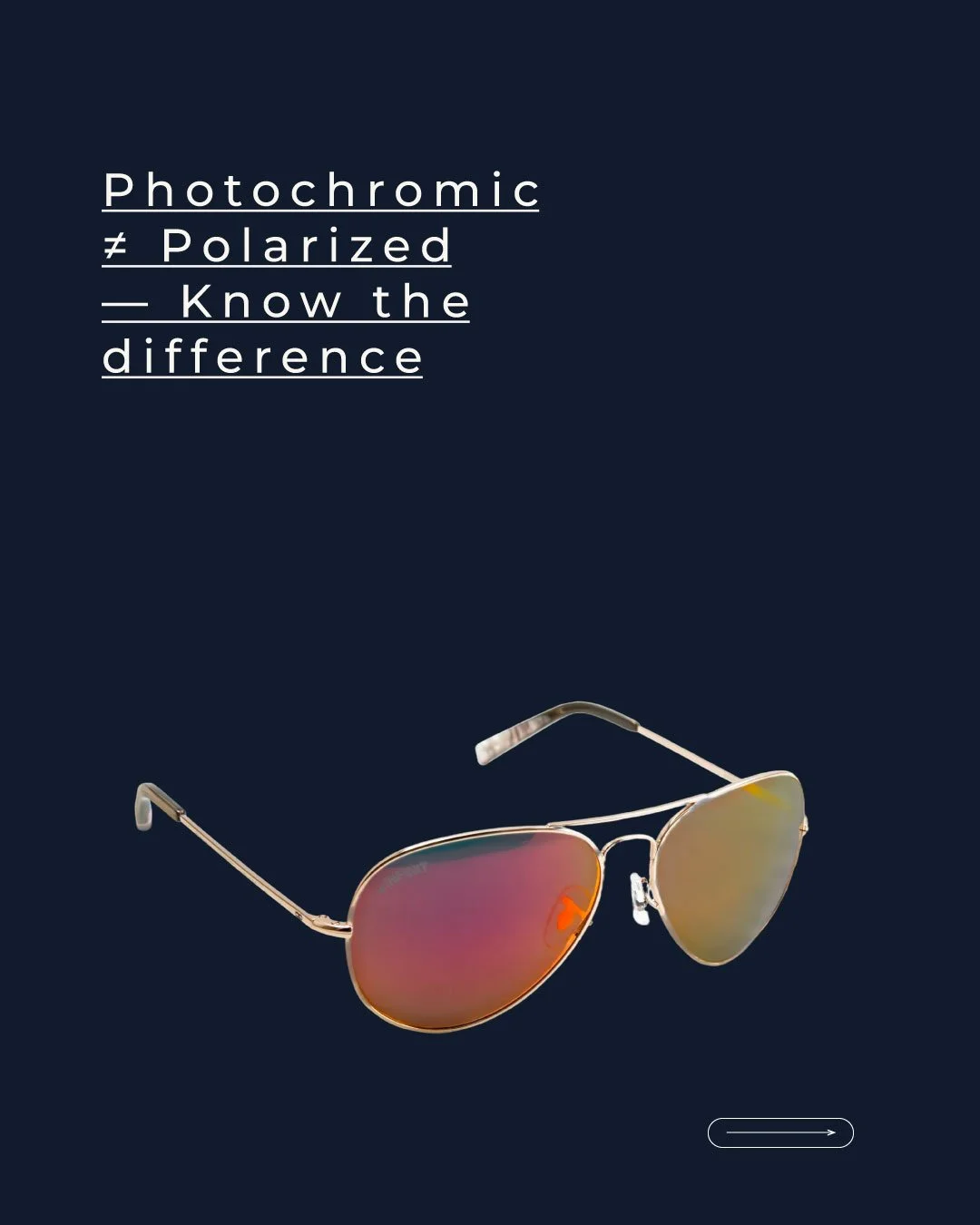
Photochromic lenses darken outdoors/clear indoors—great convenience. Polarized lenses cut horizontal glare (water/snow/roads) for superior outdoor clarity. Many patients own both (photochromic everyday + polarized sunglasses).