
URGENT EYE SYMPTOM CHECKLIST
Know what matters. Say it clearly. Get the right care faster.
When eye symptoms are sudden or severe, how you describe them matters.
This checklist helps you organize the key details doctors and ER teams rely on to make faster, more accurate decisions.
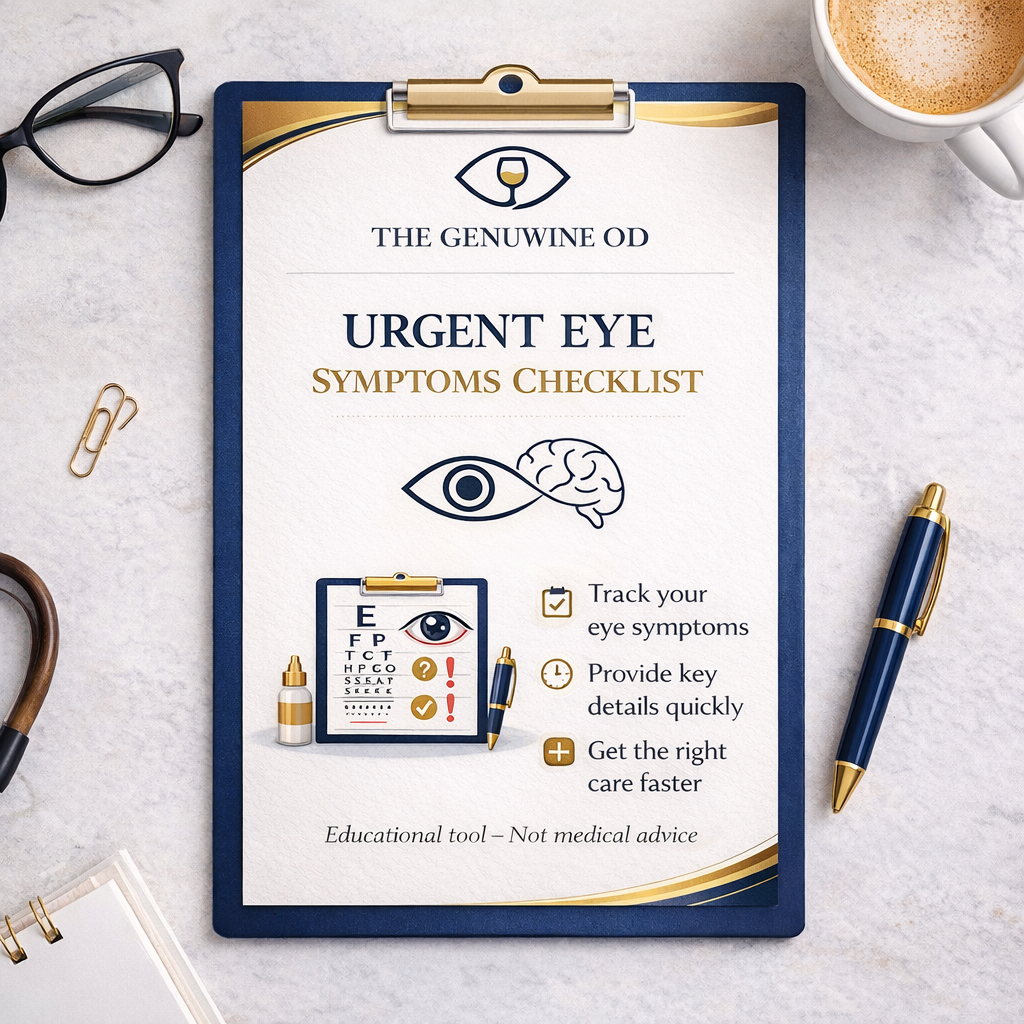
When eye symptoms are sudden or severe, how you describe them matters.
This checklist helps you organize the key details doctors and ER teams rely on to make faster, more accurate decisions.
Why This Checklist Exists
In urgent eye situations, patients often feel rushed, anxious, or overwhelmed.
Important details get missed — and that can delay diagnosis or lead to unnecessary testing.
This checklist helps you clearly communicate:
What started
How it’s changing
What makes it better or worse
Which warning signs are present
So clinicians can focus on what matters most.
What the Checklist Helps You Track
• Sudden vision loss, blur, distortion, or blind spots
• Eye pain, headache, pressure, or pain with eye movement
• Flashes, floaters, curtains, or shadows in vision
• Redness, discharge, light sensitivity, or swelling
• Neurologic symptoms that may involve the eye–brain connection
• Timing, triggers, and progression of symptoms
• Relevant medical history that affects eye emergencies
When This Checklist Is Especially Important
This checklist is designed for situations like:
• Sudden vision changes
• Severe or unusual eye pain
• New flashes, floaters, or dark curtains in vision
• Eye symptoms with headache, nausea, or neurologic signs
• Eye injury or chemical exposure
• Any eye symptom that feels urgent, scary, or different
If something feels wrong — trust that instinct and get assessed.
How to Use It
Download the checklist
Fill it out before or during your visit (ER, urgent care, or doctor’s office)
Hand it to the clinician or use it to guide your answers
Clear information helps clinicians prioritize faster and more accurately.
© Dr. Davinder Sidhu
Educational content only. Not a substitute for professional medical care.